



We Asked Chino the Hard Question: What’s Happening With the Greens?
I spent about 30 minutes trying to catch Chino — Eleazar Miramontes, Lady Bird’s golf course superintendent.
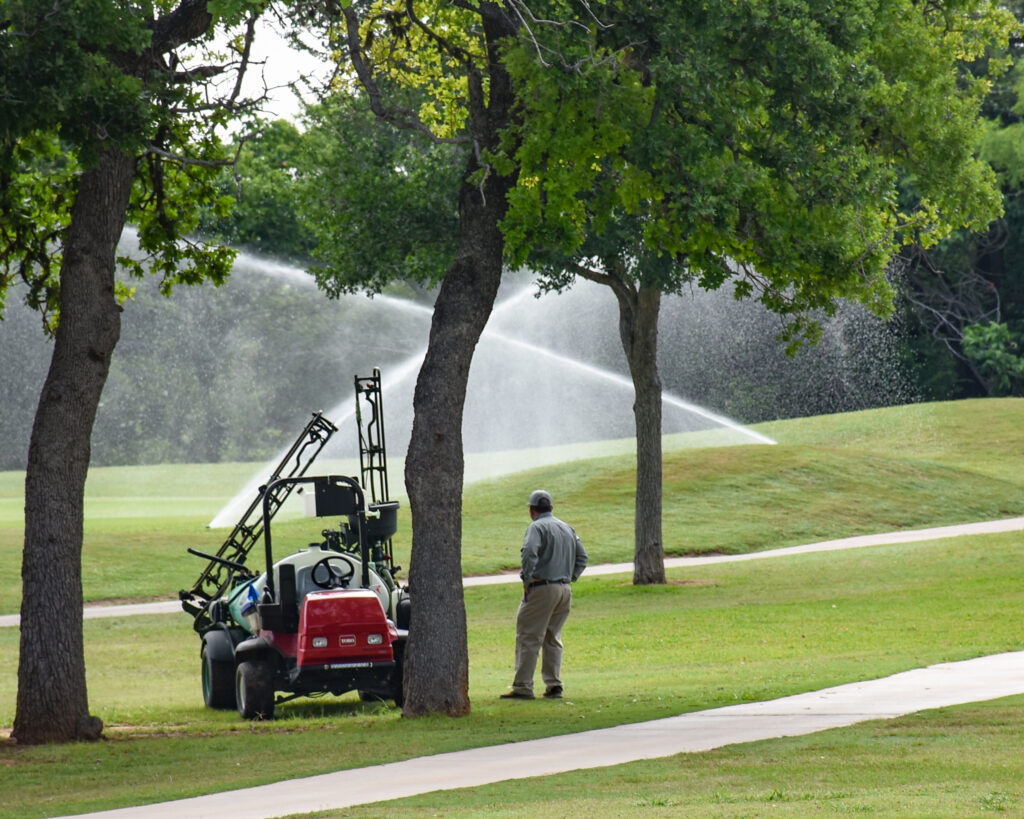
We had a meeting scheduled, but something on the course needed him first. Before we even sat down, I watched him fertilizing greens ahead of the morning tee times— a fitting introduction to the conversation we were about to have.
Eventually, we met at the clubhouse and got right to the question many golfers have been asking: What’s going on with the greens?
Chino didn’t dodge it.
From his perspective, several things hit at once this spring. An unusually early warm-up in late March and early April was followed by a hard frost — conditions not ideal for Champion grass. Then came weeks of cloud cover, rain, and limited sunshine, creating the kind of environment where disease can gain ground. None of it was friendly to a turf that already depends on a fairly narrow set of ideal conditions.
Part of what makes the situation frustrating is that much of the golf course looks great. That’s because our fairways are 419 Bermuda grass. Bermuda loves warmth and moisture. The greens, however, are Champion grass — chosen for the fast, smooth surfaces golfers expect, but also a grass that’s more particular about weather and growing conditions. This spring didn’t give that grass much of what it likes.
That doesn’t excuse the problem, but it helps explain why greens can struggle while other parts of the course seem to be thriving.
So, what are we doing about it?
The team is keeping up an aggressive program of fungicide applications, fertilization, and daily maintenance practices aimed at moving recovery forward from any angle we can control.
And we’re already seeing improvement. Chino pointed to areas that looked noticeably better within just a few days, and his outlook is optimistic. In his view, much of what golfers are seeing now could look very different in about a month.
We’re not just focused on getting through this month, either. Chino and the team are talking with turf specialists about grass varieties, soil conditions, maintenance practices, and what a more resilient long-term approach could look like. The goal, as Chino put it, is simple: “We don’t want to have this problem every spring.”
Some of that work has already started. Last year, the putting green near the clubhouse was converted to Platinum Paspalum, a variety known for handling stress well. There’s also an ongoing trial happening behind the driving range, where the same grass is being grown from seed to see how it performs over time.
Water is part of this conversation, too. Like many golf courses, we use effluent water — a responsible practice that conserves drinking water, but one that comes with added turf management challenges due to higher salt content and nutrient levels.
Would rebuilding the greens solve some issues? Maybe. But that also comes with major cost, closures, and operational decisions. For now, the team is evaluating options while continuing the day-to-day work of getting these greens healthier.
Chino doesn’t pretend the challenges aren’t real. But he also believes the course is moving in the right direction. “I’ve been here for about 18 months,” he said, “and I think we’re seeing a lot of progress around the golf course.”
That probably sums up where things stand.
The questions golfers are asking are fair. The greens aren’t where anybody wants them to be, and nobody is pretending otherwise. But there’s work happening every day to improve them — and we’ll keep you updated.